Structural steel forms the backbone of modern buildings, bridges, and industrial facilities. Its strength-to-weight ratio makes it the material of choice for framing systems that need to carry heavy loads while spanning long distances. But steel isn’t invincible. Moisture, stress, age, and changing use demands can all weaken it over time.
Catching these problems early protects more than your building’s structural integrity—it protects the people inside it. Left unaddressed, minor corrosion or a hairline crack can progress into a safety hazard that costs far more to fix down the road.
This guide walks through the warning signs that signal repair is needed, the scenarios that call for reinforcement rather than simple patching, and how professional assessment separates a quick fix from a long-term solution.
Signs Your Structural Steel Needs Repair
Steel rarely fails without warning. Most problems announce themselves well before they become dangerous, as long as someone is looking for them.
Visible Rust, Corrosion, and Deterioration
Rust is the most common threat to structural steel. Moisture, oxygen, and contaminants trigger oxidation, and that oxidation eats away at the metal’s load-bearing capacity over time. In Indiana, freeze-thaw cycles, persistent moisture, and road salt exposure can accelerate this process, especially on exposed beams, parking structures, and ground-level connections.
Rust streaks, flaking surfaces, or a rough, pitted texture are all signs that corrosion has taken hold and needs attention.
Cracks, Bending, or Deformation in Beams and Columns
Bent or twisted steel sections throw off alignment and load distribution, which can compromise the stability of the entire structure. These deformations often result from impact damage, such as a vehicle collision, or from seismic and environmental stress. Unusual deflections or sections that no longer sit flush are red flags worth investigating immediately.
Paint Peeling or Coating Failure Exposing Bare Metal
Protective coatings are your steel’s first line of defense. When paint peels or coatings fail, the bare metal underneath is left exposed to moisture and oxygen, accelerating corrosion. Peeling coatings are often an early warning sign that lets you intervene before serious rust sets in.
When Reinforcement Becomes Necessary
Not every issue calls for a straightforward repair. Sometimes, the steel needs to be made stronger, not just restored to its original condition.
Increased Loads from Building Modifications or Expansions
Adding a new floor, installing heavier equipment, or repurposing a space for a different use can all increase the demands placed on existing steel framing. If the original structure wasn’t designed to carry that extra load, reinforcement becomes essential to maintain safety margins.
Age-Related Fatigue and Metal Degradation
Steel that has carried repetitive loads for years—think bridges, industrial facilities, or high-rise frames—can develop fatigue cracking. Microcracks form and grow under cyclic stress, often invisible to the naked eye until they’ve advanced significantly. Early detection through non-destructive testing allows engineers to reinforce the steel before these cracks progress further.
Seismic Activity or Environmental Stress Factors
Extreme weather events, seismic activity, or sustained environmental stress can all compromise structural steel’s integrity, even when no single event caused visible damage. Reinforcement in these cases helps the structure better withstand future stress.
Common Structural Steel Problems
A few recurring issues account for most structural steel repair and reinforcement projects.
Corrosion and Rust from Moisture Exposure
As mentioned above, corrosion is the most widespread steel problem. Remediation depends on severity: surface cleaning and protective coatings can address early-stage rust, while advanced corrosion may require section replacement.
Fatigue Cracks from Repeated Stress and Vibration
Structures subject to repetitive loading, such as bridges or industrial buildings, are especially prone to fatigue cracking. These microcracks grow slowly under cyclic stress, which makes early detection critical.
Connection Failures and Bolt Deterioration
Connections, bolts, and welds are often the weakest link in a steel structure. Deteriorated bolts or failed welds can compromise load transfer between members, even when the steel itself looks sound.
Assessment and Inspection Process
Diagnosing structural steel issues accurately requires more than a visual once-over. It takes trained eyes and the right tools.
Professional Structural Engineer Evaluation
A licensed structural engineer should evaluate any suspected steel damage. Their assessment considers not just the visible condition of the steel, but how that condition affects the structure’s overall load-bearing capacity and compliance with local building codes.
Non-Destructive Testing Methods to Identify Hidden Damage
Many steel problems hide beneath the surface. Non-destructive testing (NDT) methods help engineers find them without damaging the structure further:
- Visual testing is typically the first step and the most basic method, identifying corrosion, cracks, deformation, and missing elements.
- Ultrasonic testing (UT) detects internal cracks that aren’t visible from the outside.
- Magnetic particle testing (MT) identifies surface and near-surface defects.
- Magnetic flux leakage detects corrosion and pitting in steel structures.
- Radiographic (RT) and dye/liquid penetrant (PT) testing assess weld quality and hidden flaws.
- Acoustic emission testing monitors crack formation and growth under stress.
Most inspection programs combine several of these methods, along with load testing and finite element analysis, to understand how existing damage affects the structure’s performance.
Documentation and Severity Rating of Findings
Every finding should be documented and rated by severity. This record helps engineers prioritize repairs, track changes over time, and support any code compliance approvals required for the work.
Repair vs. Reinforcement: Which Do You Need?
Once an assessment is complete, the next question is whether the steel needs repair, reinforcement, or both.
When Repairs Are Sufficient for Minor Damage
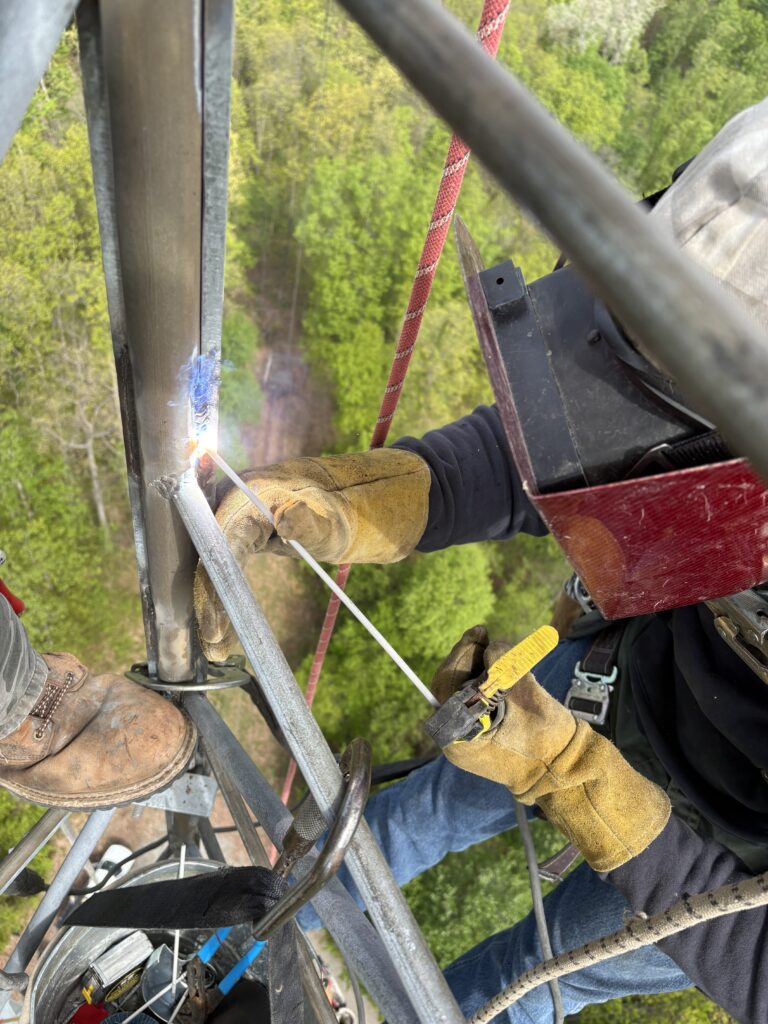
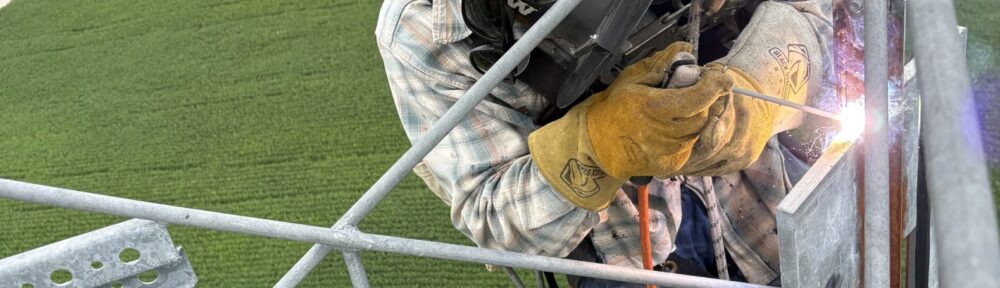
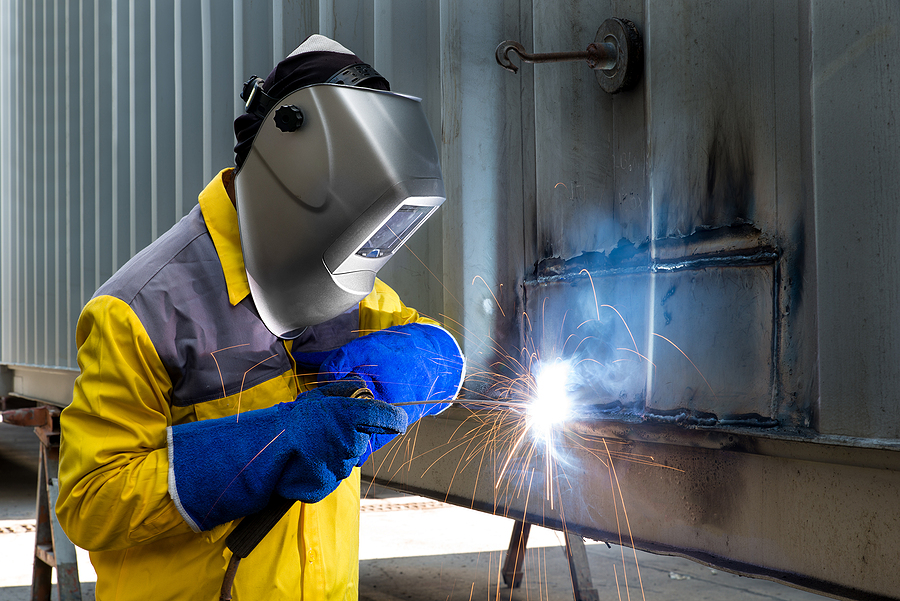
Minor corrosion, surface-level coating failure, or small cracks caught early can often be addressed through targeted repairs. Welding (using methods like SMAW, GMAW, or FCAW) is the primary technique, with preheating and controlled cooling used to reduce residual stress and brittleness. Post-weld inspection using UT or RT confirms the repair holds up.
When Reinforcement Is Required for Load-Bearing Concerns
If the steel’s load-bearing capacity has been compromised—whether by extensive corrosion, fatigue cracking, or new loading demands—reinforcement is the appropriate response. This can involve bolted or welded steel plates, carbon fiber reinforced polymer (CFRP) wraps, or structural adhesives, depending on the specific situation.
Cost Considerations and Long-Term Durability
Repair and reinforcement costs vary widely depending on the extent of damage, the type of structure, and the method chosen. Generally speaking, addressing minor defects early with routine inspections and protective coatings is far more cost-effective than waiting until extensive damage requires section replacement or major reinforcement. A proactive, preventative maintenance approach tends to lower long-term costs across the life of the structure.
DIY vs. Professional Services
Why Structural Steel Work Requires Licensed Professionals
Structural steel repair isn’t a project for amateur welders or handy building owners. It requires an understanding of load paths, code requirements, and welding metallurgy that only trained professionals possess. Deteriorated steel can also complicate welding itself, and load-bearing members often need temporary supports or load redistribution during repair work.
Safety Risks of Improper Repairs
A poorly executed repair can do more harm than the original damage. Improper welding technique can introduce new residual stresses, weaken the surrounding steel, or mask a problem rather than solve it—putting occupants at risk.
Benefits of Hiring Experienced Structural Welding Specialists
Experienced structural steel welders bring the right combination of technical skill, code knowledge, and testing protocols to ensure repairs or reinforcements actually restore (or improve) a structure’s integrity. If you suspect your building’s steel needs attention, Right Weh Welding in Indianapolis, Indiana, can evaluate the issue and recommend the right path forward.
FAQ
How often should structural steel be inspected?
Inspection frequency depends on the structure’s age, environment, use, and any history of damage. A licensed structural engineer can recommend an appropriate inspection schedule based on your specific building or facility.
Can corroded steel be repaired, or must it be replaced?
It depends on the extent of the corrosion. Early-stage surface rust can often be cleaned and recoated, while advanced corrosion that has significantly reduced the steel’s thickness may require section replacement. An engineer’s assessment is the best way to determine which approach fits your situation.
How long do structural steel repairs typically take?
Timelines vary based on the extent of damage, the repair or reinforcement method used, and whether temporary supports are needed during the work. A structural engineer or welding specialist can provide a more specific timeline once they’ve assessed the damage.
Protect Your Structure Before Small Problems Grow
Rust, cracks, and coating failures rarely stay small for long. Catching these signs early—and bringing in a qualified structural engineer and welding specialist—can mean the difference between a straightforward repair and a costly reinforcement project.
If you’ve noticed any of these warning signs in your building or facility, don’t wait. Contact Right Weh Welding in Indianapolis, Indiana, for expert structural steel evaluation and repair services.
Recent Post: What Can a Mobile Welder Repair at Your Indianapolis Jobsite?